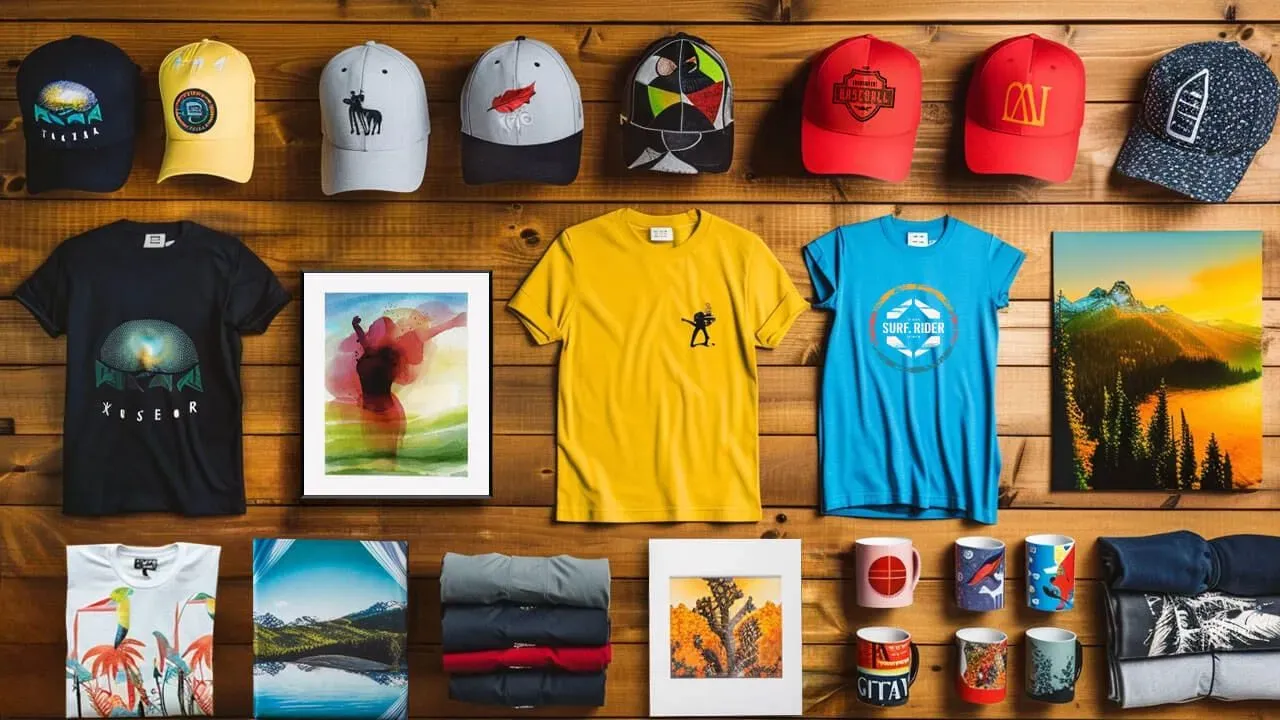
Print on demand product design has opened up entrepreneurship to countless creators, empowering fast, visually compelling launches that grab attention, communicate value, and align with a cohesive brand narrative. In a crowded market, your products must convey quality at a glance, establish trust through consistent typography and imagery, and support a scalable business model. Use POD design tips to standardize grids, spacing, and color systems, ensuring your artwork lands clearly on diverse surfaces while maintaining accessory-friendly flexibility. This approach weaves design psychology, market fit, and practical workflows into a repeatable process that scales as you grow. By iterating with feedback and testing across product lines, you can build a catalog that resonates with your audience and drives repeat purchases.
Viewed through an LSI lens, this field translates to designing for on-demand merchandise, where creative concepts must adapt to different surfaces such as apparel, mugs, and home decor while preserving a consistent brand story. The idea expands into product customization workflows, scalable art assets, and a cohesive visual language that helps shoppers recognize your label across categories. In practice, designers focus on concept-to-product processes, typography that remains legible on varied substrates, and branding strategies that convey value even in thumbnail previews. Framing the topic with terms like on-demand merchandise design, custom printing for product lines, and brand-aligned visuals captures related intent and improves search discoverability.
Mastering Design Fundamentals for Print on Demand Product Design
Great design rests on core principles that translate across products, from apparel to home goods. Start with a clean layout that respects alignment, hierarchy, and readability. Use a grid to organize elements so that each item feels intentional rather than random. Negative space is your friend; it prevents clutter and helps focal points pop. When you’re aiming to stand out, contrast becomes crucial. Pair a bold focal graphic with a legible type treatment so the message remains clear even at thumbnail size. This approach aligns with POD design tips, ensuring your work communicates value quickly and clearly.
Color theory matters in print on demand product design because colors influence mood, perception, and buying intent. Choose palettes that align with your brand story and target audience, creating a cohesive line that builds recognition—an essential aspect of print on demand branding ideas. Typography should reinforce tone, with bold sans serifs for modern energy or friendly rounded types for approachable lifestyle lines. Throughout, verify legibility across different print methods and product surfaces to sustain a consistent premium feel across your catalog, a hallmark of designing print on demand products.
Know Your Audience to Drive POD Product Design Ideas
Before you design, define who you’re designing for. Create buyer personas, map pain points, and outline the contexts in which your designs will be used. Are you targeting busy professionals seeking quick, stylish options, or students craving witty, relatable graphics? Once you articulate a few archetypes, you can tailor humor, messaging, and visuals to their realities, increasing relevance and appeal.
This is where related keywords and questions your audience asks come into play. When thinking about print on demand product design, consider what solutions your audience seeks and how your designs fit their daily life. This enables you to move from generic art to designs that feel personal and useful within a specific lifestyle, contributing to stronger engagement with ideas like POD product design ideas and other practical concepts you can scale.
A Practical Workflow to Scale Designing Print on Demand Products
A repeatable workflow helps you scale your POD product design efforts while maintaining quality. Start with a brief: define product type, colorways, and the design’s core message. Move to mood boards and concept sketches to explore directions without committing early. Use initial mockups to see how your design translates to real-world items, then refine based on print constraints and material considerations.
A solid workflow includes stages such as ideation, composition planning, typography and color decisions, file preparation for printing, and mockup verification. Factor in production realities like print areas, seams, and fabric texture. This is where POD design ideas should be tested for viability across multiple products rather than in isolation. If a concept works on a T‑shirt, it should adapt to mugs, hoodies, and wall art with respectful adjustments, implementing practical tips from POD design tips to keep execution tight.
Standout Techniques for Stand Out Print on Demand Products
To really differentiate in the market, deploy design techniques that translate well to print while feeling fresh. Prioritize a clear focal point—one strong image or phrase supported by simpler secondary elements—and use visual storytelling to hint at a narrative viewers can imagine in their daily life. Layered graphics, subtle textures, and typography as art can create a distinctive look without sacrificing print fidelity.
Additional tactics include limited color runs to reduce costs and improve recognition from afar, as well as iterative variants—colorways or composition tweaks that help you test what resonates most with your audience. These strategies align with stand out print on demand products and echo the broader POD design tips, enabling you to iterate confidently while preserving brand consistency.
Branding-Driven Product Selection and Cross-Surface Design
Branding isn’t just a logo; it’s the cohesive visual language you carry across every product. Print on demand branding ideas emphasize consistent typography, color palettes, and recurring graphic motifs that build trust and recognition. When customers encounter a familiar visual language, conversion rates can improve as they associate your line with quality and a clear story.
Not every design suits every product, so the POD product design process must assess which items fit the artwork and how to adapt visuals across surfaces. For example, a bold graphic may scale differently on a mug versus a tote bag. Mastering this cross-surface adaptability is a core element of POD product design ideas worth pursuing and reflects the principle of designing print on demand products with scalable, repeatable success across your catalog.
Frequently Asked Questions
How can I apply print on demand product design principles to stand out in a crowded market?
Start with core print on demand product design fundamentals: clean layouts, grid-based composition, thoughtful negative space, and high-contrast focal points to communicate value instantly. Use a cohesive color palette and typography that reflect your brand, ensuring legibility on thumbnails and across surfaces. Emphasize stand out print on demand products by pairing a bold focal graphic with clear messaging, guided by proven POD design tips.
What role does audience research play in print on demand product design and print on demand branding ideas?
Research your audience to define buyer personas, pain points, and use contexts. Tailor humor, messaging, and visuals to their realities, turning generic art into designs that feel personal. This informs print on demand branding ideas and POD product design ideas by ensuring your designs answer real questions and fit your target lifestyle.
How can I implement a practical workflow for designing print on demand products?
Adopt a repeatable workflow: start with a brief, move to mood boards and concept sketches, create mockups, and refine for print constraints. Follow stages—ideation, composition planning, typography and color decisions, file preparation, and mockup verification—and test adaptability across multiple surfaces, not just a single item, to support scalable designing of print on demand products.
What design techniques are most effective for creating stand out print on demand products across different surfaces?
Use techniques under POD design tips: establish a clear focal point, tell a visual story, employ layered graphics, treat typography as art, and leverage limited color runs to control cost and fidelity. Create iterative colorways and compositions to test resonance, helping stand out print on demand products across shirts, mugs, and more.
How can branding influence product design and listing optimization in print on demand product design and print on demand branding ideas?
Branding should guide every design decision: a consistent design language, typography, color palette, and recurring motifs across products. Apply your brand kit to optimize listings with accurate specs, use-cases, and clear value propositions, while weaving keywords for search. This approach aligns with print on demand branding ideas and POD product design ideas to enhance discoverability and conversion.
| Topic | Key Points | Practical Tips | |||||||||
|---|---|---|---|---|---|---|---|---|---|---|---|
| Introduction |
|
|
|
|
|
|
|
|
|
|
|
Summary
Table describes the key points of the base content in English, outlining design fundamentals, audience research, workflow, branding, product adaptation, visuals, testing, pitfalls, and inspiration. Following the table is a descriptive, SEO-friendly conclusion focused on print on demand product design.